

The Secret Handel: Works for Clavichord
Christopher Hogwood (clavichord)
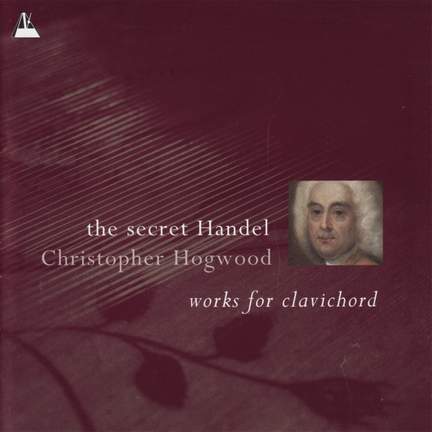
Performing on three distinguished 18th-century German clavichords, all magnificently recorded, Hogwood is throughout an eloquent advocate…
The Secret Handel: Works for Clavichord
Christopher Hogwood (clavichord)
Purchase product

We pay more royalties to artists and composers than any other streaming service with our innovative Fair Play pay-per-second model
We pay artists and composers fairly with our pay-per-second model
Performing on three distinguished 18th-century German clavichords, all magnificently recorded, Hogwood is throughout an eloquent advocate…
About
The second in the Secret series of clavichord recitals by Christopher Hogwood is devoted to Georg Frederic Handel who began his musical life as a young boy by spiriting a clavichord up to his room unbeknownst to his father who pooh-poohed music as a career! This 2-CD set in a slimline case again uses three contemporary instruments and Hogwood in a wonderful performance reveals the secret musical world which Handel created.
Contents and tracklist
Awards and reviews
 April 2006
Performing on three distinguished 18th-century German clavichords, all magnificently recorded, Hogwood is throughout an eloquent advocate…
 2010
Alas, 'The Secret Handel' does not unveil any salacious facts about the composer's sexual orientation or hitherto unsuspected illegitimate offspring.
However, Christopher Hogwood's illuminating booklet essay hints that the inclusion of a few short pieces by the Hallé organist Zachow and an aria and 24 variations by Krieger illustrate the kind of music that the young Handel might have copied in his long-lost manuscript keyboard book.
Also, Hogwood's use of clavichord reflects the famous story that the boy Handel, forbidden to learn music by his disapproving father, smuggled a clavichord into his attic in order to practice secretly during the night.
On the first disc, which includes a version of Handel's third keyboard suite ornamented by Gottlieb Muffat, Hogwood plays an instrument built by the Hamburg keyboard builder Johann Albrecht Hass in 1761. Its plangent yet warm textures produce a fascinating sound, utterly different from the familiar hard brilliance of harpsichords.
A fastidiously stylish performance of Aria and Variations in G ('The Harmonious Blacksmith') is a fine advocacy for the clavichord's virtues.
On disc two, Hogwood plays two other keyboards, including a magical-sounding Gräbner instrument (Dresden, 1761) that is similar to a small Italian clavichord now in Maidstone Museum that reputedly belonged to Handel. A few movements from the Water Music show how Handel's music might have been conceived before the compositional skeleton was garbed in orchestral flesh. Hogwood's thoughtfully prepared programme and articulate playing is a laudable fusion of scholarly detail and artistic insight.
